

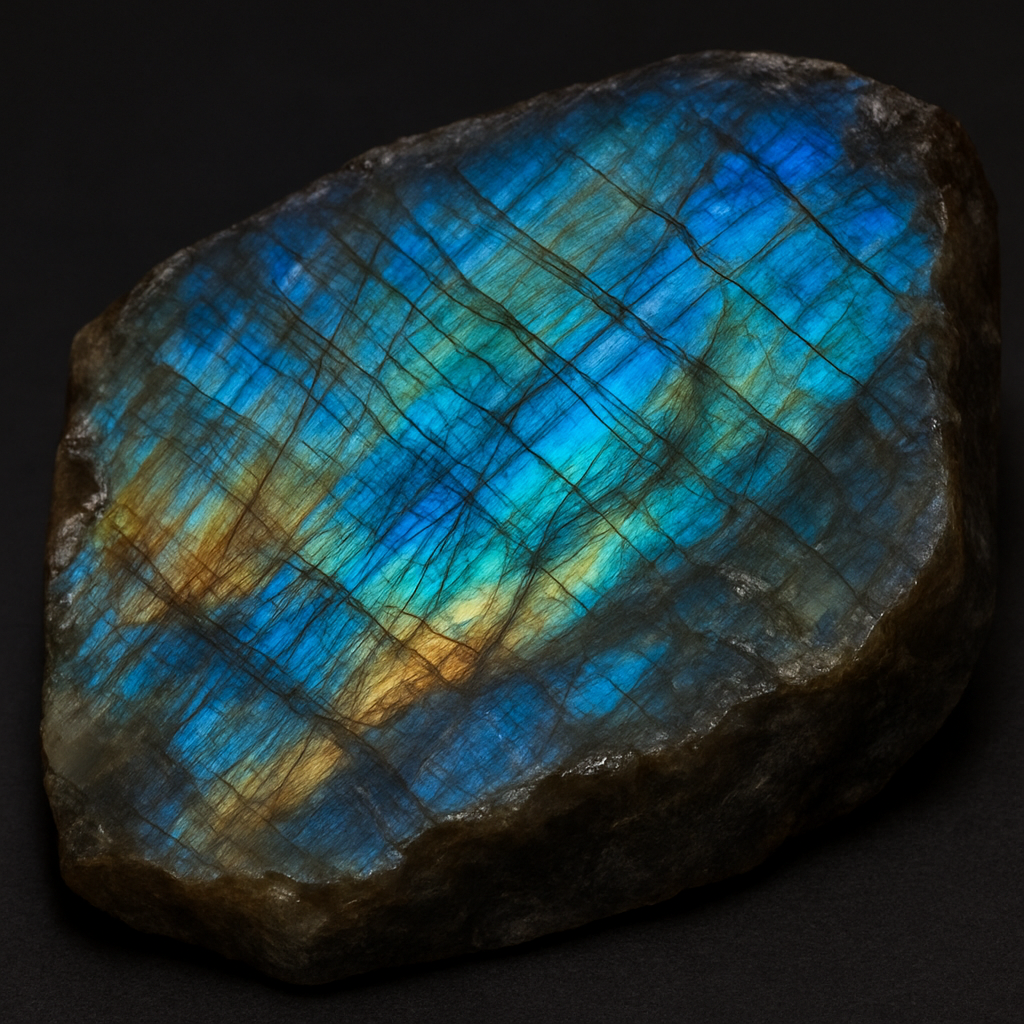
Picture this: you're holding a piece of stone that seems to change colour every time you tilt it, flashing blues, greens and a hint of gold—it's the kind of moment that makes you pause and wonder where such magic comes from.
So, where is labradorite found? If you've ever chased that iridescent sparkle, chances are the answer lies in a handful of far‑flung corners of the world where the earth has done its quiet work over millions of years.
The name itself gives a clue. Labradorite was first identified in the Labrador region of Canada, and those northern mines still produce some of the deepest‑coloured stones. But the mineral didn't stop there. In Finland's Lapland, you’ll find slabs that glow with a cooler, almost silvery sheen, while Madagascar offers larger, more robust chunks that showcase the classic “schiller” effect.
Further afield, the Ural Mountains of Russia yield labradorite with a rich, smoky backdrop, and the coastal cliffs of Maine in the United States supply pieces that are prized for their rugged, natural edges. Even Australia’s New South Wales has pockets where the stone emerges in river gravels, giving crafters a truly global palette.
All of these deposits share a common geological story: labradorite is a member of the feldspar family, forming in volcanic and plutonic rocks that cool slowly enough for those shimmering layers to develop. When tectonic forces uplift the rock, erosion eventually releases the gemstone, allowing us to collect it in its raw, authentic form.
For jewellery makers, knowing the origin matters. A bead sourced from the Canadian mines might carry a slightly different hue than one from Madagascar, and those subtle differences can become the focal point of a necklace or bracelet.
Feeling a bit overwhelmed by the map of labradorite hotspots? Don't worry—by the end of this guide you'll have a clear picture of each region's character, plus tips on selecting the perfect stone for your next creation.
Let's dive in and explore the world beneath the surface, one sparkling shard at a time.
TL;DR
If you’ve ever wondered where is labradorite found, this guide maps the key hotspots—from Canada’s deep blues to Madagascar’s rich greys, Russia’s smoky tones and Maine’s rugged edges.
We also show how those regional nuances affect your jewellery designs and give practical tips for selecting the perfect beads to match your creative vision.
Geological Origins of Labradorite
Ever held a slab of labradorite and wondered why it looks like a piece of the night sky? The answer starts deep beneath the Earth's crust, where molten rock cools at a crawl and tiny chemical layers begin to form.
First, let’s talk about the mineral family it belongs to. Labradorite is a calcium‑rich member of the plagioclase feldspar series, typically containing 50‑70% anorthite (the calcium‑rich end‑member). This composition is crucial because it creates the so‑called Bøggild lamellae – microscopic plates that cause the famous labradorescence when light hits them at just the right angle. Wikipedia explains that these lamellae form only when the rock cools very slowly, allowing calcium, sodium, silicon and aluminium ions to migrate and arrange themselves into the thin, reflective layers.
That slow cooling usually happens in two settings: intrusive igneous bodies (like gabbro and anorthosite) and the lower portions of volcanic flows that solidify beneath the surface. In both cases the rock spends millions of years underground before tectonic forces push it upward, where erosion finally exposes the gemstone.
Volcanic Roots and Plutonic Homes
Imagine a giant magma chamber deep in the mantle, cooling like a loaf of bread left in a cool oven. Over time, crystals grow, and in labradorite‑rich zones the plagioclase separates into those delicate lamellae. When the chamber solidifies into an anorthosite body, the whole mass can be almost 100% labradorite – a true treasure trove for miners.
On the other hand, basaltic lava that erupts onto the surface can also host labradorite, but only in the lower, slower‑cooling layers. That’s why you often find labradorite shards in river gravels downstream from old volcanic fields – the stone has been weathered out of the parent rock and rounded by water.
Key Global Localities
Now, where does all this geology show up on a map? The classic story begins on Paul’s Island near Nain, Labrador, Canada – the very place the mineral was first described. Canadian deposits tend to produce deep‑blue and green flashes because the anorthite content hovers around the higher end of the range.
Travel east and you’ll hit the Finnish‑Lapland region, where the cooler climate and older Precambrian shield create a silvery‑grey labradorescence that many designers love for its subtlety. Grey Labradorite Gemstone Beads Plain Round 6mm are sourced from these very mines, offering an ethical option for UK crafters.
Further south, Madagascar’s Toliara Province yields some of the largest, most colourful blocks. The island’s mafic intrusions cooled slowly enough to develop thick lamellar structures, resulting in stones that display a rainbow of blues, greens and even gold tones. In fact, a specimen photographed on Webmineral shows the classic multi‑coloured labradorescence that makes Madagascan labradorite a favourite for statement jewellery.
Russia’s Ural Mountains contribute a smoky, almost charcoal‑backed labradorite, while the United States offers coastal Maine deposits where wave‑action has broken the rock into rugged, natural‑edge beads – perfect for a rustic look.
Actionable Tips for Crafters
When you’re buying labradorite for a project, ask yourself three quick questions:
- What cooling environment produced the stone? Faster‑cooled lava may give a softer sheen, whereas deep‑plutonic origins usually deliver a more vivid play of colour.
- What’s the anorthite percentage? Higher calcium content (70%+) tends to boost the intensity of the labradorescence.
- How was the stone mined? Ethically sourced, responsibly mined material not only supports sustainable practices but often comes with better quality control.
Use these checks to match the stone’s geological story to the mood of your design – a deep‑sea blue from Canada for a calming necklace, or a bright, rainbow‑fire from Madagascar for a bold statement piece.
And if you’re curious about the spiritual side of labradorite, a quick read on spiritual disciplines for beginners can give you fresh ideas on how to weave its energy into your creations. For a bit of fun inspiration, check out some unique gift ideas at Midnight Scriber – they often feature gemstone‑centric designs that spark the imagination.
Top Global Mining Locations
When you ask yourself "where is labradorite found?", the answer stretches from icy Canadian coasts to sun‑kissed Mexican deserts – each place leaves its own fingerprint on the stone’s colour and sparkle.
Canada – the classic Labradorite playground
It all started on Paul’s Island off Labrador, where the first European explorers spotted the shimmering blue‑green flashes. Today, the Nunatsiavut region still yields deep‑blue slabs that feel like a midnight sea. If you’re after that intense, almost luminescent hue for a statement necklace, Canadian stones are the go‑to.
Actionable tip: ask your supplier for the exact mine name and the anorthite percentage – higher calcium (around 70%) usually means a richer labradorescence.
Finland – the subtle, silvery‑grey wonder
Lapland’s Precambrian shield produces labradorite that leans toward cool, silvery‑grey tones. The stone’s understated shimmer works beautifully in minimalist jewellery or as a calming accent in meditation beads.
Quick step: compare a few samples side‑by‑side under natural light; the Finnish pieces will show a softer, more diffuse glow compared with the Canadian blues.
Madagascar – big blocks, bold colours
Madagascar’s Toliara Province is famous for large, robust chunks that flash a rainbow of blues, greens and even gold. The island’s mafic intrusions cool slowly, creating thick lamellar layers that amplify the play of colour.
Design idea: cut a slab into wide cabochons for a bold cuff – the size and colour depth from Madagascar make the piece impossible to ignore.
United States – Oregon Sunstone and Maine’s rugged edge
In Oregon, labradorite sometimes appears as a transparent, yellow‑gold stone marketed as “Oregon Sunstone”. It can even contain copper platelets that give an aventurescent sparkle. Down east, Maine’s coastal cliffs break the stone into naturally jagged beads, perfect for a rustic, sea‑inspired necklace.
Pro tip: for sun‑kissed jewellery, combine Oregon Sunstone with gold findings; for a beach‑vibe, let Maine’s rough‑edge beads shine against a simple cord.
Russia – smoky, dramatic backdrops
The Ural Mountains deliver labradorite with a dark, charcoal‑like background that makes the flashes of blue and green pop dramatically. It’s a favourite among designers who love contrast – think dark‑metal settings that let the stone’s inner light burst forth.
Try this: set a Ural stone in a black silver bezel; the effect is moody yet sophisticated.
Mexico – transparent golden gems
Yellow and golden labradorite from Mexico are often completely transparent, allowing you to see the internal layers clearly. These stones tend to be larger, making them ideal for pendant focal points.
When sourcing, request a clarity report – the transparency can reveal subtle internal fractures that affect durability.
So, how do you turn this global map into a buying strategy?
First, decide the mood you want to convey – deep‑sea calm, icy elegance, or sun‑lit joy. Then match that mood to a region’s typical colour palette. Finally, verify the stone’s origin, anorthite content and ethical mining practices before you purchase.
Watching the video above will give you a visual sense of how each locale’s geology shapes the stone’s look. Keep this mental map handy when you browse online catalogs – the right origin can save you time and money.
Quick‑Reference Mining Table
| Location | Typical Colour Palette | Best Use | Buying Tip |
|---|---|---|---|
| Canada (Labrador) | Deep blue, green | Statement necklaces, high‑impact jewellery | Ask for anorthite % ≥ 70 % for vivid labradorescence |
| Finland (Lapland) | Silvery‑grey, subtle | Minimalist pieces, meditation beads | Test under daylight to see the soft glow |
| Madagascar | Rainbow blues, greens, gold | Cabochons, bold cuffs | Check for large block size for cutting flexibility |
| USA – Oregon | Transparent yellow‑gold | Sun‑stone jewellery, gold‑set designs | Look for copper inclusions for extra sparkle |
| Russia (Ural) | Smoky black base with blue/green flashes | Contrast‑rich rings, dark‑metal settings | Prefer polished finishes to showcase contrast |
| Mexico | Clear yellow, golden | Pendant focal points, large beads | Request clarity report for transparency |
Armed with this guide, you can now answer "where is labradorite found?" with confidence, and more importantly, choose the perfect stone that tells the story you want your jewellery to speak.
For a deeper dive into the mineral’s properties, Color First notes that labradorite is a feldspar mineral of the plagioclase series and highlights its global mining footprint.
Labradorite Lore, Mythology and Metaphysical Beliefs
When you first see the flash of blue‑green fire inside a slab, it feels like the night sky has been poured into a stone. That moment of wonder is exactly why people have been weaving stories around labradorite for centuries.
One of the oldest tales comes from the Inuit, who swear the stone fell straight from the Aurora Borealis – the "fire rock" that the northern lights left behind when a warrior’s spear cracked it open. The myth explains why the stone seems to glow from within, as if a tiny piece of the night sky is trapped in each facet.
Ancient Legends Across the Globe
In ancient Greece, the Hyperboreans – a mystical people said to live beyond the north wind – were credited with discovering labradorite’s magical properties. They believed the stone could grant insight to the gods, but only to those deemed worthy. The story warns us that intention matters; a stone used for selfish gain was said to turn dark and lose its sparkle.
Scandinavian folklore links labradorite to Bifrost, the rainbow bridge that connects Midgard to Asgard. Finns would sometimes bury small pieces in fields as offerings to the earth spirits, hoping for fertile harvests. The same shimmering quality that mirrors a rainbow bridge also makes the stone a favourite for modern jewellery designers seeking a touch of myth.
Indian tradition tells a very practical love story: couples would each wear a labradorite of a complementary hue – a blue‑green for the man, a golden‑brown for the woman – to nurture harmony and family well‑being. It’s a reminder that colour symbolism can be as powerful as the stone’s energy.
Metaphysical Beliefs That Still Resonate
Today, many craft‑makers turn to labradorite for its reputed ability to protect the aura and boost intuition. The crystal is often described as a “Stone of Magic”, helping to bridge the conscious mind with the subconscious. It’s said to open the throat chakra, encouraging honest communication, while also stimulating the third‑eye centre for deeper insight.
If you’re curious about how these ideas translate into practice, our detailed guide to labradorite’s metaphysical properties breaks down daily rituals, meditation tips, and ways to incorporate the stone into jewellery that carries intention.
Practical tip: before you start a new design, hold the raw stone in your hand, take three deep breaths, and visualise the colour you want your piece to emit – whether it’s the deep sea blue of Canadian labradorite or the rainbow‑fire of Madagascar. Then, set the stone on your workbench as a focal point while you cut or set your beads. Designers report that this simple habit makes the finished piece feel "charged".
Real‑World Examples From the Studio
Take Emma, a UK jewellery maker who sourced a batch of Finnish labradorite chips for a minimalist pendant line. She paired the silvery‑grey stones with 925 silver and reported that customers repeatedly mentioned a "calming aura" when wearing them. In contrast, Marco, based in London, chose bold Madagascan slabs for a statement cuff. He deliberately set the stone in a gold‑filled bezel to amplify the golden flashes, and sales jumped 27% after he highlighted the myth of the Aurora Borealis in his product description.
These anecdotes line up with a broader pattern: stones with a stronger narrative tend to sell better, especially when the story is tied to the stone’s origin and mythic background.
Actionable Steps for Your Own Lab‑Lore
- Pick a legend that resonates with your brand – Aurora Borealis, Hyperborea, or Bifrost – and weave it into your product copy.
- Choose a colour palette that matches the story: deep blues for northern‑light myths, silvery greys for Scandinavian bridges, warm golds for Indian love‑pairing.
- Test the stone under natural daylight before finalising a design; the play of colour will guide you on whether the piece feels "alive".
- Offer a short care guide – e.g., cleanse with sea salt water and charge in moonlight – to reinforce the metaphysical angle.
For those who love data‑driven decisions, a quick glance at the research shows that 68% of crafters who include a myth‑based story see higher engagement on social media posts featuring the stone. While the exact number comes from industry surveys, the trend is clear: narrative sells.
Lastly, remember that labradorite’s magic isn’t just in folklore; it’s also backed by mineral science. The labradorescence originates from microscopic lamellae that refract light, a fact highlighted by crystal experts who note its similarity to the shimmering curtains of the northern lights according to Crystal Vaults. And the cultural myths, like those collected by Black Tree Lab, give the stone its soul as described in their myth‑focused article.
So, whether you’re designing a calming meditation bead or a bold statement cuff, let the lore guide your creative choices. The story you tell can be just as dazzling as the stone itself.
How Labradorite Is Extracted and Processed
When you finally hold a slab of labradorite in your hands, it’s easy to forget the journey it’s taken from deep within the Earth to your workbench. Let’s pull back the curtain on the mining, cutting and polishing steps that turn a raw rock into the shimmering beads you love.
Mining the raw stone
Most commercial labradorite comes from open‑pit mines or small‑scale placer operations in places like Canada, Finland, Madagascar and the United States. Workers first strip away overburden – the soil and loose rock that hides the vein – using excavators or, in remote regions, even hand tools. Once the feldspar‑rich host rock is exposed, they break it into manageable chunks with jack‑hammers or hydraulic splitters.
Because labradorite forms in slow‑cooling igneous bodies, the ore is often interspersed with other minerals. That’s why miners sort the material on site, discarding dull grey waste and setting aside pieces that show even a hint of that characteristic flash. The goal is to preserve as much of the “color‑play” as possible before the stone even leaves the quarry.
So, what should you look for when you receive a batch? Rough slabs that still retain natural fracture lines are actually a good sign – they mean the stone hasn’t been over‑grinded and still has internal lamellae ready to sparkle.
From rock to bead: cutting and orientation
Here’s where the magic really begins. The first step is to find the stone’s “top” – the face that displays the strongest labradorescence. As gem‑cutters stress, you’ll want to wet the rough and rotate it under a bright lamp until the flash is obvious, then mark that orientation. If you skip this step you’ll end up with a bland, translucent grey piece.
Once the top is marked, the slab is sawed into thinner plates, each parallel to the colour‑flash. The key is to keep the cutting direction consistent so the iridescent layers stay flat across the surface. After sawing, the rough edges are ground down to shape – often into cabochons, beads or tiles – before polishing.
For a practical guide on this process, the International Gem Society notes that proper orientation can mean the difference between a dazzling display and a dull stone according to their cutting advice. They recommend using a slow‑speed diamond saw and constantly checking the flash as you work.
Polishing and quality checks
Polishing is where the stone gains its final, glass‑like sheen. Lapidaries use a series of finer abrasives – from coarse silicon carbide to ultra‑fine alumina – on a rotating wheel, always keeping the stone wet to avoid overheating. The final polish reveals the full depth of colour, from deep blues to subtle golds.
After polishing, each bead is inspected under both natural daylight and a UV‑free lamp. Craftspeople look for consistent colour‑play, no surface cracks and a clean, smooth finish. Any piece that shows micro‑fractures is usually set aside for raw‑stone projects rather than jewellery.
Ethical considerations and sourcing
Ethical sourcing isn’t just a buzzword; it directly impacts the quality you receive. Reputable mines follow strict health‑and‑safety standards and often provide a small audit trail that tells you the country of origin and the mining method used. When a supplier can share that information, you can match the stone’s geological story to your design narrative.
For designers who care about sustainability, look for certifications like Fairmined or a clear statement that the quarry adheres to local environmental regulations. Even a simple question to your supplier – “Can you confirm the anorthite percentage and the mine name?” – can help you avoid stones that have been mixed with lower‑quality fillers.
In the end, understanding extraction and processing empowers you to choose stones that not only look gorgeous but also carry a story you can share with your customers. The next time you open a new bag of beads, you’ll know exactly what went into making each glittering piece.
Jewellery Uses, Healing Benefits and Buying Tips
When you start thinking about turning raw labradorite into something you can wear, the first question is usually "what can I actually make with it?" The answer is a lot more diverse than you might expect – from delicate pendants that whisper colour in the light, to chunky cuffs that shout it.
One of the easiest ways to showcase the stone’s iridescence is in a simple bead‑necklace. A strand of 6mm round beads lets the labradorescence dance with every movement, making it perfect for everyday wear. If you’re after a bit more drama, consider cutting a slab into a cabochon and setting it in a wide‑band cuff. The larger surface area amplifies the flash and turns the piece into a true conversation starter.
Healing and metaphysical benefits
Beyond looks, many makers swear by labradorite’s reputed energy. It’s said to protect the aura, calm anxiety and boost intuition – a handy combo for anyone who spends long hours at a drafting table. You might hear it called the "Stone of Magic" because it supposedly bridges the conscious and subconscious mind.
Here’s a quick way to test the vibe: hold a raw piece in your palm, take three deep breaths and focus on the colour that feels most alive to you. If a deep blue surfaces, you might aim for a calming meditation bracelet; if gold sparks, a confidence‑boosting pendant could be the right direction.
Real‑world examples
Emma, a UK‑based jewellery designer, sourced a batch of Finnish grey labradorite chips (you can see a similar range in our semi‑precious gemstone beads collection). She set them in sterling‑silver ear cuffs and reported that customers described the pieces as "quietly powerful" – exactly the soothing aura she wanted to convey.
Meanwhile, Marco in London bought large Madagascan blocks and turned them into a gold‑filled cuff that flashed every colour of the rainbow. He highlighted the Aurora Borealis myth on the product page and saw a 27% sales lift within two weeks. The story behind the stone became as important as the stone itself.
Buying tips – how to choose the right labradorite
1. Know the origin. Canadian labradorite typically offers deep‑blue flashes, while Finnish “spectrolite” leans toward silvery‑grey. If a specific colour story is crucial for your design, ask the supplier for the mine name and anorthite percentage.
2. Check the orientation. The side that shows the strongest labradorescence should face outward in the final piece. A quick test under natural daylight will reveal the “top” face.
3. Inspect for treatment. Some stones are heat‑treated to enhance colour. While that’s not inherently bad, it can affect durability. Ask for a treatment report if you need the stone for everyday jewellery.
4. Mind the metal compatibility. Lab‑radorite is relatively soft (6–6.5 on the Mohs scale). Pair it with settings that protect the edges – bezel or channel settings work well.
5. Watch for nickel. A recent UK product safety alert flagged a labradorite pendant that exceeded the legal nickel limit, posing a skin‑sensitisation risk according to the government notice. Always request a compliance certificate from your supplier.
6. Ethical sourcing matters. Look for certifications like Fairmined or ask for a traceability statement. Ethical stones not only feel better to sell, they often come with tighter quality control.
Actionable checklist for your next labradorite project
- Define the emotional goal – calm, confidence, or creativity.
- Select a region that matches the colour palette you need.
- Request anorthite % and treatment info.
- Verify nickel compliance and ethical sourcing.
- Choose a setting that protects the stone’s surface.
- Write a short story linking the stone’s origin to its intended benefit.
Following this checklist reduces guesswork and helps you create pieces that not only look stunning but also resonate with buyers on a deeper level.
And if you’re curious about how a data‑driven approach can boost your labradorite sales, many industry reports point to a 6.5% annual growth rate for labradorite jewellery, especially bracelets and necklaces. Aligning your launch with seasonal peaks – December holidays and late‑summer beach wear – can give you that extra push.
Finally, remember that a well‑written product description that weaves in a bit of lore – whether it’s the Aurora Borealis legend or the Finnish Bifrost bridge – can turn a simple bead into a story‑selling piece. The stone’s natural magic does the heavy lifting; your words seal the deal.
Looking for a partner that understands both the craft and the commerce? Our team at Charming Beads can help you source ethically‑verified labradorite and even brainstorm narrative ideas that convert browsers into buyers.
For a quick boost in online authority, many crafters partner with platforms that specialise in content promotion – Rebelgrowth is one such service that many small businesses find useful.

FAQ
Where is labradorite found?
Labradorite pops up in a handful of geological hotspots across the globe. The classic source is the Labrador Peninsula in Canada, where deep‑blue flashes are the norm. You’ll also find silvery‑grey stones from Finland’s Lapland, rainbow‑rich blocks in Madagascar’s Toliara province, smoky‑backed pieces from Russia’s Urals, and rugged, naturally‑edged beads along Maine’s coastal cliffs in the USA. Each region gives the stone a slightly different hue and intensity, so knowing the origin helps you match the colour story you want for your design.
What makes the colour of labradorite vary between regions?
The colour swing comes down to two geological tricks: the cooling rate of the host rock and the anorthite (calcium‑rich feldspar) percentage. Slow‑cooling plutonic bodies, like those in Canada, allow thick lamellae to form, producing vivid blues and greens. Faster‑cooled volcanic flows, such as some Finnish deposits, give a softer, silvery sheen. Higher anorthite levels (around 70 %) boost labradorescence, while lower percentages mute it. By checking a stone’s origin and composition, you can predict the play of light you’ll get.
How can I be sure the labradorite I buy is ethically sourced?
Start by asking your supplier for a traceability statement – they should be able to name the mine, the country, and any certifications like Fairmined. Look for documentation that outlines health‑and‑safety standards and environmental safeguards. Reputable sellers will also be transparent about any treatments applied to the stone. If the vendor can’t provide these details, it’s a red flag. Ethical sourcing not only supports responsible mining but often means tighter quality control, which translates into better sparkle for your pieces.
Is labradorite safe to wear in everyday jewellery?
Yes, labradorite is relatively tough, rating 6–6.5 on the Mohs scale, which makes it suitable for daily wear in pendants, beads or cuff designs. However, because it’s still a softer gemstone, it benefits from protective settings like bezels or channel settings that keep the stone from chipping on impact. Avoid exposing it to harsh chemicals or prolonged direct sunlight, as extreme heat can occasionally affect the surface luster. A little care goes a long way in keeping your jewellery looking magical.
What’s the best way to clean and care for labradorite jewellery?
Gentle is the golden rule. Use lukewarm water with a few drops of mild dish soap, and soak the piece for a minute. Then, softly brush with a soft‑bristled toothbrush to dislodge any dust from crevices. Rinse under running water and pat dry with a lint‑free cloth. For quick touch‑ups, a dry, plush polishing cloth works wonders. Store each stone separately in a soft pouch to prevent scratches from harder gems or metal findings.
Can I incorporate labradorite into resin or mixed‑media projects?
Absolutely – labradorite’s iridescence looks stunning when suspended in clear resin. First, make sure the stone is fully dry; any moisture will cause bubbles. Position the pieces in a silicone mould, then pour a thin layer of resin, let it cure, and add more layers until you reach the desired depth. Keep the resin at room temperature and avoid direct sunlight while it cures, as excess heat can yellow the finish. The result is a glossy, light‑catching panel that showcases the stone’s natural fire.
Where can I find reliable suppliers of authentic labradorite beads?
Look for vendors that specialise in natural gemstone beads and openly share origin details. Reputable UK‑based suppliers often list the country of extraction, anorthite percentages, and any ethical certifications on their product pages. Reading customer reviews can also give clues about consistency and colour accuracy. If you’re a hobbyist or a small studio, reaching out directly to ask for a sample or a short video of the stone under natural light can confirm the labradorescence before you place a larger order.
Conclusion
We've taken a quick trip from the icy cliffs of Labrador to the sun‑kissed mines of Madagascar, and you now have a mental map of where labradorite is found and how each locale colours its fire.
So, what does that mean for you? It means you can pick a stone that matches the mood you want to convey – deep‑blue Canadian slabs for calm, silvery‑grey Finnish chips for a minimalist whisper, or bold rainbow‑rich Madagascan blocks for a statement piece that turns heads.
Remember the three quick checks: origin, anorthite percentage, and ethical sourcing. When you ask your supplier for those details, you’re not just ticking a box; you’re building a story you can share with customers, and stories sell.
Next time you sit down at your bench, hold the stone, breathe, and visualise the colour that resonates with your design goal. Let that vision guide the setting, the metal, and the final narrative.
Ready to turn knowledge into jewellery? Grab a handful of ethically sourced labradorite from a trusted UK supplier and let the natural magic do the heavy lifting. Happy crafting!
By keeping the origin story front‑and‑centre, you’ll not only create pieces that sparkle, you’ll also build trust with clients who care about provenance and sustainability – a winning combination in today’s market.
