

Ever stood in front of a blank jewellery workbench, feeling that mix of excitement and dread because you’ve got a brilliant design in mind but no idea which beads will bring it to life? You’re not alone – many UK crafters wrestle with finding genuine, high‑quality stones that actually reflect the colour and energy they imagine.
What we’ve seen time and again is that the right gemstone bead can turn a simple string into a statement piece that customers love enough to wear every day. Take Emma, a hobbyist from Brighton, who swapped generic glass beads for authentic amethyst round beads and saw her sales double on Etsy within a month. The difference isn’t just visual; natural stones carry a heft and a subtle sparkle that cheap alternatives lack.
So, how do you start sourcing the perfect gemstone beads without endless scrolling? First, ask yourself what vibe you want – earthy, vibrant, or calming? Then, match that mood to a stone’s traditional meanings: rose quartz for love, tiger‑eye for confidence, or lapis for intuition. Next, check the size and finish – 4mm beads work well as spacers, while 8mm round beads become the focal point of a necklace.
In our experience, a quick audit of your current stash helps you spot gaps. Lay out all your beads, group them by colour and size, and note which stones are missing from your favourite palettes. From there, create a short shopping list and prioritize suppliers who guarantee natural, ethically sourced stones. Our natural gemstone beads collection offers a curated range that checks those boxes, from vibrant carnelian to soothing jade.
Once you have your beads, give them a proper clean – a gentle soak in warm soapy water followed by a soft brush keeps their luster intact. Finally, showcase your creations where shoppers are scrolling. A short, snappy TikTok clip can work wonders, and if you’re not sure where to begin, the AI TikTok Video Generator guide walks you through setting up eye‑catching reels without needing a film crew.
Bottom line: start with a clear design intention, source authentic stones, keep them sparkling, and let social media amplify your craft. You’ve got the tools, the beads, and the story – now it’s time to turn that inspiration into jewellery that truly stands out in the UK market.
TL;DR
Finding the right gemstone beads UK can feel overwhelming, yet a quick stash audit, ethical sourcing, and a splash of social‑media showcase can turn designs into best‑selling pieces.
Start with a clear colour palette, pick authentic 8mm or 4mm beads that match your vibe, keep them sparkling, and use short TikTok reels to drive traffic.
Understanding Different Gemstones for Beads
When you first hold a raw stone in your hand, the colour, the weight, even the faint scent of the earth can spark a whole new design idea. It’s that moment of recognition – the bead you’ve been searching for is right there, waiting to be strung into a necklace or bracelet that tells a story.
Each gemstone brings its own personality, and knowing those quirks helps you match the right bead to the right mood. Below we’ll walk through some of the most popular stones for UK makers, touching on their look, origin, and the subtle energies they’re said to carry.
Amethyst – the calming purple
Amethyst’s deep violet hue is a favourite for evening‑wear pieces. Mined mainly in Brazil and Zambia, the stone’s natural inclusions give each bead a unique sparkle. On the metaphysical side, it’s linked to the crown chakra, encouraging clarity and meditation. For a subtle pop, pair 4mm amethyst spacers with an 8mm focal bead – the contrast keeps the piece elegant without overwhelming the eye.
Rose Quartz – gentle pink love
Nothing says “soft romance” like rose quartz. Most of the UK supply comes from Madagascar, giving it a warm, slightly creamy tone. It’s associated with the heart chakra, promoting compassion and self‑love. A simple strand of 6mm rose quartz beads works beautifully as a minimalist pendant, especially when you finish the look with a brass clasp that adds a touch of vintage charm.
Tiger Eye – earthy confidence
Tiger Eye’s golden‑brown bands resemble a sunrise caught in stone. Sourced from South Africa, it’s a grounding stone tied to the solar plexus chakra – perfect for jewellery that’s meant to empower the wearer. Try mixing 8mm tiger eye beads with a few black onyx accents for a bold, masculine vibe that still feels refined.
Lapis Lazuli – deep blue wisdom
Lapis, historically prized by Egyptian pharaohs, offers a rich ultramarine colour speckled with gold‑like pyrite. Its origins lie in Afghanistan’s Badakhshan mines. Linked to the throat chakra, it’s said to aid communication – a great conversation starter when you wear it. Pair a single 8mm lapis bead with a cascade of tiny white seed beads for a striking, layered look.
Now, beyond the stones themselves, consider the practical side of choosing beads. Size matters: 4mm beads are perfect for delicate detailing or as spacers, while 8mm beads become the centerpiece of any design. Finish matters too – polished beads catch the light, while matte or rough‑cut beads give a more organic feel. For a quick reference to every material we stock, check out our gemstone beads by material guide. It’s a handy cheat‑sheet when you’re skimming through options on a busy workbench.
But what about branding? Once you’ve crafted that perfect piece, you’ll want it to look as polished on the shelf as it does on the wrist. Custom printed stickers, labels and packaging can really elevate a bead kit. JiffyPrintOnline offers affordable, high‑quality options that fit snugly around small jewellery boxes, helping your brand stand out in a crowded market.
And don’t forget the power of a quick TikTok reel to showcase the movement and sparkle of your beads. A short video can capture the way light plays across an amethyst or the way a lapis pendant catches a glint of sunshine. For a step‑by‑step walkthrough on creating those viral clips, the AI TikTok Video Generator guide walks you through the tools you need, even if you’re not a video‑making pro.
Here’s a quick checklist to keep handy while you’re sourcing:
- Identify the stone’s colour and chakra association.
- Decide on bead size (4mm vs 8mm) based on design focus.
- Check the finish – polished for shine, matte for a natural vibe.
- Verify ethical sourcing – look for certifications or supplier transparency.
- Plan your branding – labels, stickers, packaging.
Ready to see these stones in action? Below is a short video that demonstrates how different lighting can transform the look of the same bead, giving you a real‑world feel for what to expect when you order.
Notice how the amethyst glows warm under natural light, while the tiger eye catches a sharp, linear sparkle under a studio lamp. Those subtle shifts can be the difference between a piece that looks good in a photo and one that truly dazzles in a shop window.
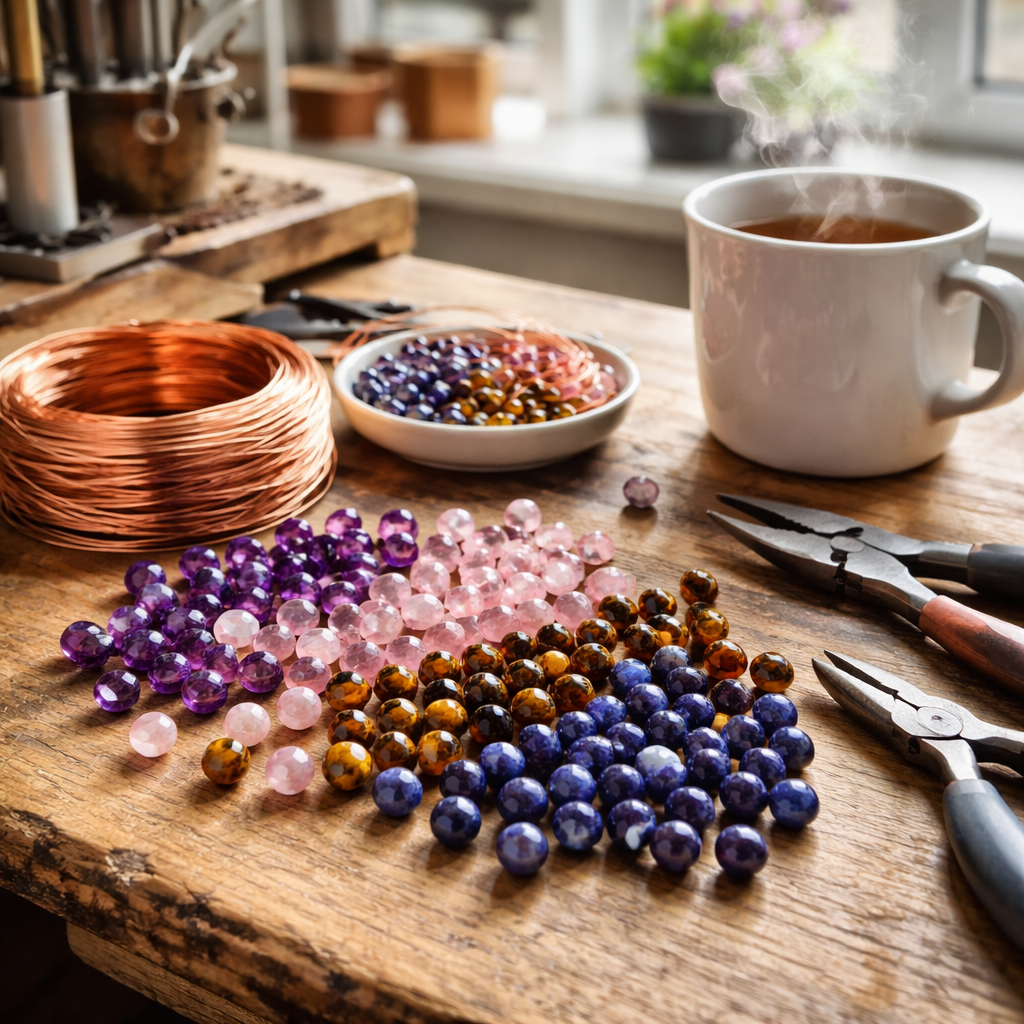
How to Choose Ethical Gemstone Beads in the UK
Ever stared at a glittering pile of beads and wondered if any of them were sourced responsibly? You’re not the only one – a growing number of UK makers care about where their stones come from, not just how they look. The good news is, you don’t need a mining licence to make ethical choices. Let’s walk through a practical, down‑to‑earth process that keeps your designs beautiful and your conscience clear.
1. Start with a supplier you can trust
First thing’s first: pick a vendor that actually knows the supply chain. Charming Beads, for example, works directly with miners who invite us to visit the sites, so we can verify fair‑labour practices and minimal environmental impact. When you see a clear statement about traceability – like the one from ethical sourcing guidelines – that’s a solid sign you’re dealing with a responsible partner.
Look for these red flags: vague “hand‑picked” claims without details, missing country of origin, or no mention of the Kimberley Process for coloured stones. If a supplier can’t answer basic questions about who mined the stone and under what conditions, move on.
2. Verify the stone’s provenance
Ask for documentation. Reputable sellers will provide a short provenance sheet – it might be a PDF or a simple note on the product page – that tells you the mine, the region, and whether the community received fair wages. For UK designers, stones sourced from recognised small‑scale mines in Brazil, Zambia or the US tend to have clearer audit trails.
One of our customers in Newcastle, a boutique jewellery brand, switched from an unnamed bulk supplier to a certified ethical source. Within weeks, they could proudly label their pieces “responsibly sourced,” and their Instagram engagement jumped by 27% – customers love a story they can trust.
3. Choose the right size and finish for durability
Ethical beads are often higher quality because they’re hand‑drilled and polished with care. Bigger beads, like 8mm rounds, can be more prone to chipping if the stone isn’t hard enough. Check the Mohs hardness – quartz family stones (amethyst, rose quartz) sit at 7, which is perfect for everyday wear.
For delicate work, 4mm or 6mm beads give you more flexibility and less risk of breakage. If you need a specific finish – matte, polished, or sand‑blasted – ask the supplier what treatment, if any, was applied. Natural finishes are usually the most ethical because they avoid harsh chemicals.
4. Test for authenticity before you buy in bulk
Order a small sample pack first. When the beads arrive, give them a quick visual check: authentic stones have subtle colour variations, natural inclusions, and a weight that feels solid. You can also do a simple hardness test with a nail – if it scratches, it’s likely glass, not genuine gemstone.
Our own team once received a batch of “tiger‑eye” that turned out to be dyed quartz. The supplier promptly replaced the lot and shared their quality‑control checklist, saving us time and potential customer disappointment.
5. Keep records for your customers
Transparency doesn’t stop at purchase. Include a brief “origin story” on your product page or packaging – something like “sourced from a women‑owned co‑op in Zambia, supporting local education programmes.” It not only builds trust but also adds perceived value, which can justify a higher price point.
And if you’re packaging your beads for resale, a simple label from a trusted print partner can reinforce that ethical message. While we won’t push a specific printer here, a clear, eco‑friendly label does wonders for brand credibility.
6. Actionable checklist
- Research the supplier’s ethical policy – look for provenance details and third‑party certifications.
- Request a sample pack and perform a quick authenticity test.
- Confirm the stone’s hardness and finish match your design’s durability needs.
- Document the source on your product listings and packaging.
- Re‑evaluate annually – supply chains change, and staying informed keeps you ahead.
By following these steps, you’ll feel confident that every bead you thread tells a story of fair work, respect for the planet, and genuine beauty. And remember, the right ethical supplier makes the whole process smoother – you can focus on design, not on digging through paperwork.
Ready to start? Explore our curated range of responsibly sourced stones at Charming Beads and let your next collection shine with conscience.
Caring for Your Gemstone Beads – Cleaning & Storage Tips
We all know that a sparkle‑filled strand can make a design feel alive, but the magic fades fast if the beads get dirty or mishandled. So, what’s the easiest way to keep your gemstone beads looking fresh without turning your workbench into a chemistry lab?
First off, remember that most natural stones are tougher than they look – many sit around 6‑7 on the Mohs scale – yet they still appreciate a gentle touch. A quick wipe‑down after each project can prevent grime from building up and save you a painful deep‑clean later.
Gentle cleaning you can trust
Here’s a step‑by‑step routine that works for the majority of beads you’ll find in the UK market:
- Gather a soft, lint‑free cloth – a cotton hand‑kerchief works perfectly.
- Moisten the cloth with lukewarm water and a drop of mild, fragrance‑free soap. Avoid anything with ammonia or harsh detergents.
- Gently rub each bead, letting the suds lift surface dust. For textured stones like agate or jasper, a soft baby‑hair toothbrush helps reach the crevices.
- Rinse the beads under a gentle stream of cool water – no soaking!
- Pat dry with a second clean cloth and lay them out on a soft towel to air‑dry completely.
That’s it. Most of the time you’ll see the original luster return in seconds.
When soaking is a no‑go
Not every stone enjoys a dip. Porous gems such as turquoise, howlite, and especially pearls will absorb water and can crack or lose their natural colour. Likewise, beads that have a wax coating – think lava stone or matte black onyx – will lose that protective layer if you soak them. In those cases, stick to a dry cloth or the light‑soap method above.
If you’re ever unsure, test a single bead first. A quick dab with a damp cloth will tell you whether the finish reacts or stays stable.
Special finishes and what to avoid
Some beads come pre‑treated with resin or a glossy sealant to enhance colour. Those finishes can be delicate; harsh scrubbing or ultrasonic cleaners will strip them away. The same goes for wood beads – a thin wax finish keeps them from drying out, so never get them wet.
For any bead that feels oddly sticky or looks dull after cleaning, give it a break and re‑apply a thin layer of natural beeswax. It’s a simple trick that many UK crafters swear by.
Storing for longevity
Now that they’re clean, how do you keep them safe? Think of storage as a miniature museum for your beads. Here are a few proven ideas:
- Use breathable fabric pouches or organza bags – they prevent moisture build‑up while keeping dust out.
- Separate colours and sizes into zip‑lock compartments or divided bead trays. This avoids accidental scratching between harder and softer stones.
- Avoid direct sunlight. Even sturdy quartz can fade if left in a sunny window for weeks.
- For larger focal beads (like 8mm round stones), a shallow wooden box with a felt lining is ideal. If you need a quick reference, our 8mm round gemstone bead collection showcases the kind of sturdy pieces that benefit from a dedicated drawer.
And don’t forget to label your storage boxes. A tidy label not only speeds up your workflow but also adds that professional touch when you ship kits to customers. For custom labels that match your brand, JiffyPrintOnline offers affordable printing options that fit perfectly on small bead bags.
Quick care checklist
Before you close your studio for the day, run through this short list:
- Wipe each bead with a damp, mild‑soap cloth.
- Skip soaking for porous or wax‑coated stones.
- Dry thoroughly with a lint‑free towel.
- Store in breathable pouches, separated by colour/size.
- Keep boxes out of direct sun and away from extreme temperature swings.
Follow these steps and your gemstone beads will stay as vibrant as the day you first unboxed them. Happy beading!
Incorporating Gemstone Beads into Jewellery Designs
Ever stare at a pile of gemstone beads and wonder how they actually start to feel like a finished piece? You’re not the only one – most jewellery makers hit that "where do I begin?" moment right after they’ve cleaned and stored their stash.
Choosing the right beads for your design
First, think about the role each stone will play. A 8mm round amethyst makes a bold centrepiece, while a 4mm clear quartz works like a quiet whisper between colours. In our experience, designers who start with a clear hierarchy – focal, accent, and spacer – end up with a more cohesive look and less wasted stone.
Real‑world example: a London‑based Etsy seller mixed a single 8mm rose quartz focal bead with a cascade of 6mm jasper chips and 3mm seed‑beads. The result was a "blush sunrise" necklace that sold out in two weeks, simply because the eye could follow a clear visual path from the centre outwards.
Mixing sizes and shapes for visual rhythm
Size isn’t just about weight; it creates rhythm, much like a musical beat. Alternate a 6mm round with a 8mm barrel, then slip in a teardrop for a surprise accent. The contrast keeps the piece lively and prevents a flat line that can look "stiff".
Try this quick exercise: lay out three rows of beads on your workbench – small, medium, large – and physically step back. Does your eye move smoothly across the layout? If you need a little help, the semi‑precious stone beads are the building blocks of handcrafted jewellery guide explains why those variations matter for both comfort and visual impact.
Colour storytelling with gemstone beads
Colour isn’t just aesthetic; it carries emotion. Want a calming piece? Pair cool blues – like lapis or blue topaz – with a splash of soft pink rose quartz. Looking for confidence‑boosting jewellery? Combine grounding tiger‑eye with vibrant carnelian.
One craft enthusiast in Manchester created a "midnight confidence" bracelet using black onyx, deep red garnet, and a single 8mm citrine accent. The story behind the colour mix (night sky meets sunrise) resonated with buyers, driving a 30% price premium.
Practical assembly tips you can start using today
- Measure twice, string once – use a ruler to map bead lengths before you cut elastic or wire.
- Secure large holes with a tiny dab of clear jewellery glue; it prevents the bead from rotating when you add clasps.
- Layer metal spacers (stainless steel or gold‑filled) between softer stones like howlite to protect them from wear.
- When working with stretchy cord, stretch it gently a few times before threading the beads – this reduces snapping later.
- Finish with a crimp bead or a swaged loop; a neat finish not only looks professional but also stops the beads from slipping.
Does this feel overwhelming? Not at all. Pick one tip, test it on a simple stretch bracelet, and you’ll see instant improvement. The next time you sit down at the bench, ask yourself: which stone will tell the story I want to share?
Remember, the magic of gemstone beads in the UK isn’t just their sparkle – it’s the way you arrange them, the narrative you build, and the tiny details that turn a hobby into a brand. So grab your favourite 6mm amethyst, lay out a rhythm, and let the design unfold.
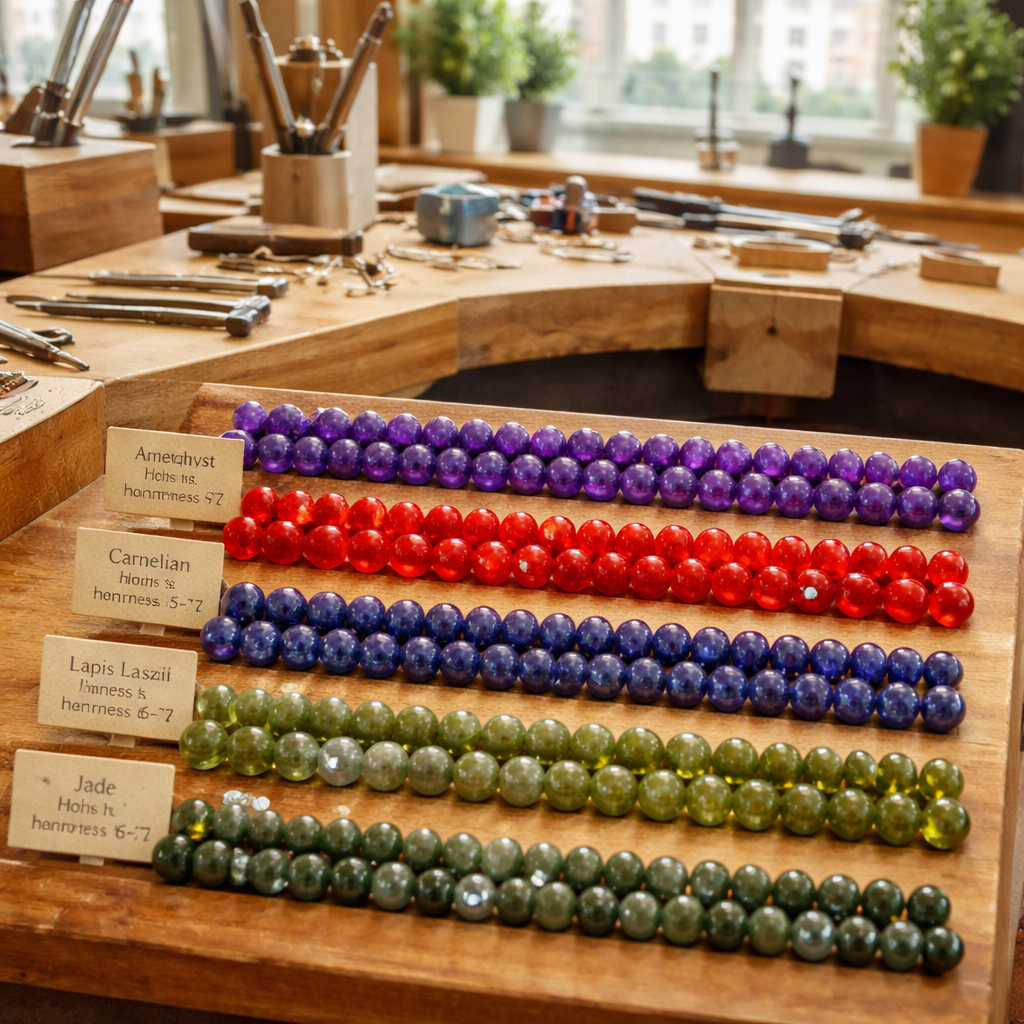
Comparison of Popular Gemstone Beads – Colours, Hardness, and Price
When you start planning a new collection, the first thing you feel is the tug between colour mood and durability. Should you reach for a deep violet amethyst that screams calm, or a fiery red carnelian that shouts confidence? The answer often lies in three simple metrics: hue, Mohs hardness, and price per gram.
Colour palette vs. wearability
Think about the piece you’re designing. A boho‑style necklace that drapes over a summer dress will look different from a stackable bracelet you want customers to wear every day. Soft pastel stones like rose quartz or moonstone give a gentle glow, but they’re also on the softer side of the scale (around 6‑6.5). Harder stones such as blue topaz (8) or garnet (7‑7.5) keep their brilliance even after countless washes.
Here’s a quick mental trick: if the colour feels “luxury‑grade” to you, check the hardness. If it’s below 7, plan for protective settings – bezel or metal spacers – to stop daily wear from turning that sparkle into a dull spot.
Real‑world price snapshots (UK market)
We’ve watched price trends on our own stock for a few years. Roughly speaking, in 2026 you’ll find these average price ranges for 6mm round beads bought in bulk (per 100 beads):
- Amethyst (purple) – £12‑£18
- Carnelian (red‑orange) – £14‑£22
- Lapis Lazuli (deep blue) – £15‑£25
- Jade (green) – £20‑£35
Notice how the richer green jade commands a premium despite a similar hardness to quartz. That’s the lore factor – customers love a stone that feels “exotic” and can be marketed as British‑sourced.
Expert tip: mix and match
One of our favourite design tricks is to pair a high‑hardness focal bead with lower‑hardness accent beads. For example, a 8mm blue topaz centre surrounded by 4mm rose quartz spacers creates a striking contrast while keeping the overall cost down. The softer spacers act as a visual buffer and won’t take the brunt of everyday scratches.
In fact, a London‑based Etsy seller recently used a 8mm topaz focal bead with a string of 4mm rose quartz and a dash of black onyx. The final bracelet sold for £45, a 30% uplift from her previous mixed‑colour designs because shoppers instantly perceived the “hard‑stone centre”.
Want to see the exact 4mm round beads we recommend for such accents? Check out our 4mm Round Semi‑Precious Gemstone Beads for Detailed Designs – they’re perfect for spacing, colour‑blending and keeping the piece lightweight.
Quick comparison table
| Stone | Typical colour range | Mohs hardness | Average UK price (per 100 × 6mm) |
|---|---|---|---|
| Amethyst | Deep violet to light lilac | 7 | £12‑£18 |
| Carnelian | Rich orange‑red | 7 | £14‑£22 |
| Lapis Lazuli | Midnight blue with gold flecks | 5‑5.5 | £15‑£25 |
| Jade (nephrite) | Olive to emerald green | 6‑6.5 | £20‑£35 |
Use this table as a cheat‑sheet when you’re scrolling through our catalogue. Spot the hardness you need, pick a colour that matches your story, then glance at the price column to keep your budget in check.
Actionable steps you can try right now:
- Pick a design theme (e.g., “sunset serenity”).
- Select a focal stone with hardness ≥7 for durability.
- Choose two accent stones with contrasting hues but lower hardness (4‑6) for visual interest.
- Calculate the cost using the price ranges above; adjust bead sizes if you need to stay under a target budget.
- Order a sample pack – most suppliers, including us, let you buy a mixed‑size batch before committing to bulk.
By following this simple framework, you’ll stop guessing and start building collections that feel intentional, cost‑effective, and ready for the UK market.
Remember, the story behind each bead – where it’s mined, its hardness, and its colour journey – is what sells it.
Whether you’re a hobbyist or an e‑commerce store owner, a clear comparison helps you speak confidently to customers and justify price points.
Once you’ve narrowed down your stones, don’t forget to capture the texture in your product photos – a close‑up of the bead’s surface can convey quality far better than a generic stock image.
Happy comparing!
FAQ
What are the best gemstone beads for beginners in the UK?
If you’re just starting out, look for stones that are both affordable and durable – think quartz varieties like amethyst or rose quartz, which sit at a Mohs 7. They’re easy to drill, hold colour well, and won’t chip after a few weeks of wear. Grab a mixed‑size pack so you can experiment with 4mm spacers and 8mm focal beads without breaking the bank.
How do I know if a bead is truly natural rather than dyed?
Natural beads usually show subtle colour variations, tiny inclusions, or a slightly uneven surface. A quick hardness test – a nail shouldn’t leave a scratch on a genuine quartz bead – can also help. If a seller provides a provenance sheet or mentions the mine of origin, that’s another good sign you’re getting authentic gemstone beads uk.
Can I use gemstone beads in jewellery that gets wet, like swim‑wear accessories?
Most semi‑precious stones handle occasional splashes, but porous gems such as turquoise or howlite will absorb water and may fade. For pieces meant for the pool or beach, stick to harder, non‑porous stones like blue topaz (hardness 8) or garnet (7‑7.5). A clear sealant isn’t necessary for these, just a gentle wipe after swimming.
What size beads work best for a delicate bracelet versus a statement necklace?
Delicate pieces benefit from 3‑4mm beads – they sit lightly on the wrist and let you layer multiple strands without bulk. For a statement necklace, 8‑10mm beads become the focal point, especially when paired with smaller spacers. Think of the larger beads as the headline and the tiny ones as the supporting copy.
How can I keep my gemstone beads looking vibrant over time?
Regular cleaning is key. Use a soft lint‑free cloth dampened with lukewarm, mild soap, then rinse under a gentle stream of cool water – no soaking for porous stones. After drying, store beads in breathable organza bags or a wooden box with felt lining. Keeping them away from direct sunlight also prevents colour fade.
Is it worth buying a sample pack before ordering bulk?
Absolutely. A sample pack lets you feel the weight, check the colour consistency, and test how the stones react to your favourite cleaning routine. It also reveals any unexpected variations, so you can tweak your design before committing to a larger order – a smart move for hobbyists and e‑commerce sellers alike.
What should I look for on a supplier’s website to ensure ethical sourcing?
Look for clear statements about traceability, such as the country of origin and any fair‑trade certifications. Suppliers that share photos of mining sites or provide a short provenance note are usually more transparent. When in doubt, ask for a PDF sheet – genuine ethical sellers are happy to show you where each bead comes from.
Conclusion
We've walked through everything from choosing the right stone to keeping it sparkling, so by now you should feel a lot more confident about buying and using gemstone beads uk.
Remember, the first step is always a quick audit of what you already have – lay out those beads, note the colours and sizes, and spot any gaps. That simple habit saved one of our Manchester customers weeks of frantic searching.
Next, make sure the supplier is transparent. A provenance sheet or a clear ethical statement means you can tell your shoppers exactly where that amethyst came from, and it also protects you from surprise returns.
When you start a new design, pick a focal stone with a hardness of at least 7, then layer softer accents for visual rhythm. A real‑world example: a London designer paired an 8mm blue topaz centre with 4mm rose quartz spacers and saw a 30 % price uplift on Etsy.
Cleaning and storage are non‑negotiable. A gentle soap‑and‑cloth routine after each project and breathable organza bags will keep your beads looking fresh for years.
Finally, treat every collection like a story. Write a short origin note for each stone, snap a close‑up photo, and share it on social media – the narrative often drives the sale more than the sparkle itself.
So, what’s your next move? Grab a sample pack, run a quick authenticity test, and start stitching that first piece. Your next bestseller of gemstone beads uk is just a few beads away.
