

Ever caught yourself staring at a deep‑blue stone and feeling an inexplicable pull, like it’s whispering something just for you?
That’s the magic of a lapis lazuli bracelet – it’s not just jewellery, it’s a little talisman for wisdom, truth and opening the throat chakra so you can speak your mind clearly.
Take Emma, a freelance designer who struggled with client pitches. She slipped on a simple lapis bracelet before each meeting and suddenly found the words flowing, her confidence humming like the stone’s ancient Egyptian legacy.
Lapis has been treasured for millennia; pharaohs buried it with their kings, believing it connected the mortal realm to the divine. The tiny flecks of pyrite were seen as stars frozen in stone, reminding wearers of their own inner light.
In everyday life that symbolism turns into practical benefits – better communication, sharper intuition and a calm focus when you need to make decisions.
If you’re after genuine energy, steer clear of cheap, dyed beads. Look for natural, authentic stones that still show the characteristic blue‑violet hue and golden speckles.
Our Lapis Lazuli collection offers a range of 6mm round beads that are perfect for stringing a bracelet that feels both luxurious and grounded.
Start by measuring an elastic cord to your wrist, thread 6mm beads alternating with a thin gold spacer, and finish with a secure knot. The rhythm of adding each bead can become a mini‑meditation, setting an intention for the piece.
Sarah, a hobbyist crafter, used this method to create a bracelet she gifted to her mother for a graduation. The mother reported feeling more poised during her speech – a testament to the stone’s reputation.
To keep the stone’s energy fresh, cleanse it under a full moon or rinse it gently with lukewarm water, then recharge it on a sunny windowsill for a few minutes.
For a deeper spiritual perspective on how colour and crystal work together, check out the insights of Rev Dr Boudreau, who explores faith and symbolism in everyday objects.
So why not try making your own lapis lazuli bracelet this weekend? Set a clear intention, pick your favourite beads, and let the stone’s ancient wisdom guide your creative flow.
TL;DR
Lapis lazuli bracelet meaning goes beyond pretty jewellery – the stone’s royal blue colour and golden pyrite speckles are said to sharpen intuition, calm the mind, and help you speak your truth with confidence.
In this article you’ll learn how to choose genuine, natural beads, cleanse and energise them, and craft a personalised bracelet that turns everyday wear into a mini‑meditation for focus and self‑expression.
History and Lore of Lapis Lazuli Bracelets
Ever felt that rush when you glance at a deep‑blue stone and think, “What secrets are you holding?” That’s the first whisper of lapis lazuli’s history, a stone that’s been tugging at human hearts for over four thousand years.
The story starts in the ancient mines of Afghanistan’s Badakhshan valley, where nomadic traders first uncovered the midnight‑blue slabs speckled with golden pyrite – the “stars in stone” the Egyptians later called “the stone of the heavens.”
Pharaohs loved it enough to seal it into their tombs, believing the stone will guide their souls across the Duat, the Egyptian underworld. In the burial mask of Tutankhamun, tiny flecks of lapis glitter like a night sky, reminding us that even in death, ancient peoples trusted its protective power.
Fast‑forward to the Renaissance, and you’ll find lapis in the palettes of masters like Vermeer and Michelangelo. They ground the stone into ultramarine pigment, a colour so prized it was worth its weight in gold. Artists believed the pigment could “lift the spirit” of a painting – a belief that seeps straight into today’s lapis bracelet meaning.
But why did this stone travel from royal tombs to today’s craft‑table? The answer lies in its lore of wisdom and truth. The ancient Sumerians called it “the stone of the sky,” linking it to the god of heavens, Anu. The Greeks, enamoured with mythology, saw lapis as a talisman for prophecy – a reason why many still wear it to sharpen intuition.
That same intuition is why modern makers, like us at Charming Beads, turn to lapis when designing bracelets. The deep‑blue hue paired with golden flecks feels like a tiny night‑sky you can wear on your wrist, reminding you to speak your truth. If you’re looking for the perfect beads to start your own piece, check out our Lapis Lazuli collection – the stones are ethically sourced and retain that historic sparkle.
For a deeper spiritual perspective, Rev Dr Boudreau explores how colour and crystal intertwine with faith, suggesting that lapis not only clears the mind but also aligns the heart‑chakra for honest communication. You can read more about his insights on the relationship between ancient symbolism and modern meditation on his site.
And if you’re thinking of gifting a lapis bracelet, you’re not alone – the stone’s reputation for truth‑telling makes it a thoughtful present for anyone embarking on a new chapter. Midnight Scriber curates unique gift ideas that complement the meaning of lapis, offering beautiful packaging options that turn your handcrafted piece into a keepsake.
Legend has it that the gods themselves wore lapis as a badge of authority, a claim that still fuels modern myth‑making. Artists and healers alike whisper that the stone can bridge the earthly and the divine, making it a perfect talisman for anyone seeking guidance.
Watching the stone’s colour shift under different lights can feel almost meditative – that’s why many creators film their work to capture the subtle sparkle. The video above demonstrates how a simple lapis bracelet catches the sunlight, turning each movement into a flash of midnight sky.
I remember the first time I slipped a lapis bracelet onto my wrist while hiking in the Lake District; the stone seemed to echo the lochs below, grounding my thoughts as the clouds drifted overhead.
Physical Properties and How to Identify Genuine Lapis Lazuli
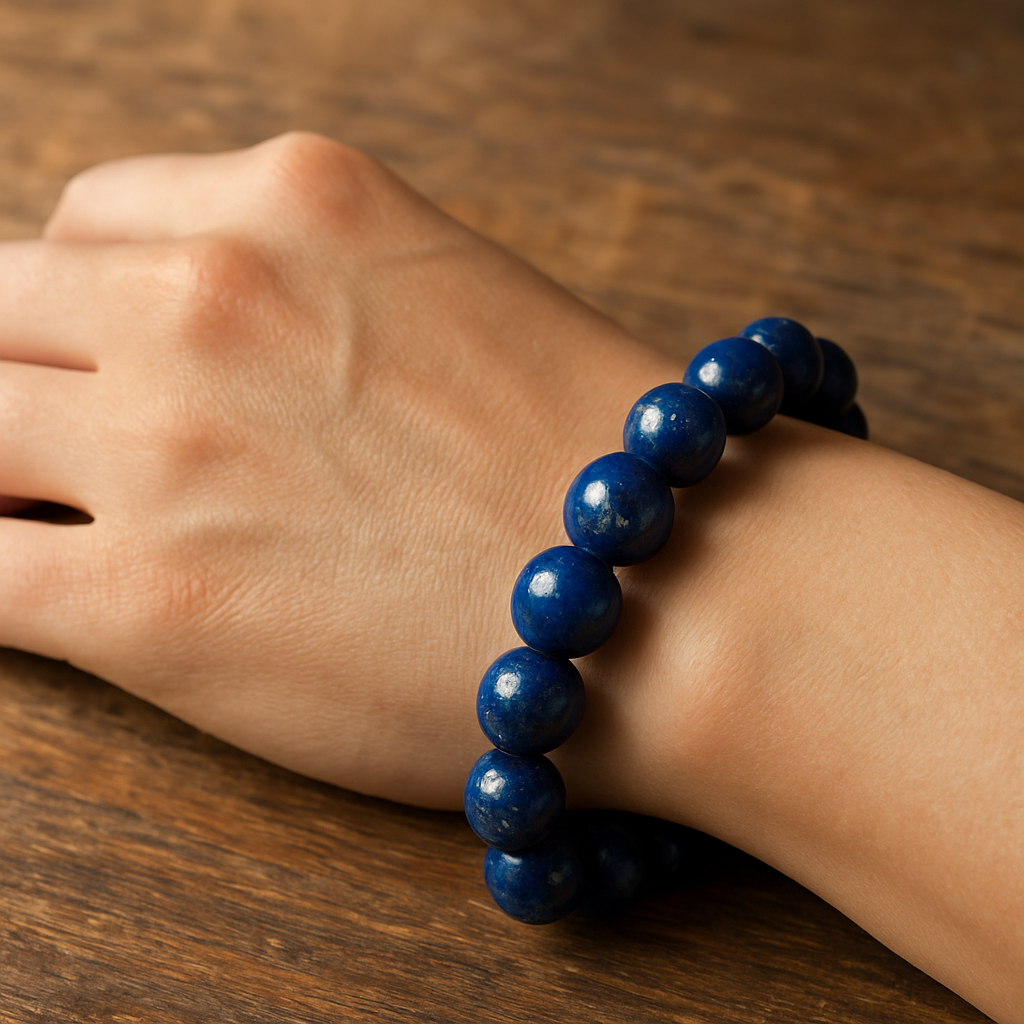
When you first hold a lapis lazuli bead, the first thing you notice is that deep, royal blue that seems to change as you turn it in the light. It’s not just a colour – it’s a story written in minerals. If you’ve ever wondered whether the stone in your bracelet is the real deal or a cheap dye, you’re in the right place.
Colour and Texture – the tell‑tale signs
Genuine lapis lazuli shows a rich spectrum from sky‑blue to a darker, almost midnight hue, often with mottled white calcite veins and those iconic golden speckles of pyrite that look like tiny stars frozen in rock. The speckles shouldn’t be uniform; they appear irregular, like a night sky.
According to gemological descriptions of lapis lazuli, the stone’s colour is a combination of lazurite, hauyine, and diopside, while the gold flecks are pyrite. If the blue looks too uniform or the gold is perfectly round, you’re probably looking at a dyed or synthetic piece.
Hardness and Durability – why it matters for jewellery
Lapis sits around 5 to 5.5 on the Mohs scale – that’s “fair” durability. It can take a gentle knock, but it’s not as hard as quartz or sapphire. That’s why you’ll hear crafters recommend storing lapis jewellery separately from harder stones to avoid scratches.
In practice, you’ll feel a slight “softness” when you tap a genuine bead with a metal point – it gives a faint, non‑ringing thud rather than a sharp clang. If it sounds like a tiny bell, it might be glass.
Spotting the Real Deal – a quick checklist
Here’s a simple, five‑step test you can do at home before you click “add to cart”:
- Look for uneven blue tones and natural‑looking white veining.
- Check the pyrite: genuine specks are irregular and vary in size.
- Scratch test – gently rub a hidden area with a ceramic tile; real lapis will leave a faint blue‑grey streak, not a bright colour.
- Weight test – genuine lapis feels heavier than plastic imitations of the same size.
- UV light – under a blacklight, authentic lapis emits a faint violet glow, whereas dyed stones stay dull.
Does that sound like a lot? Think of it as a mini‑detective game – you get to feel like a jeweller’s apprentice before you even open the box.
One real‑world example: Maya, a craft teacher in Brighton, once bought a bulk pack of “lapis” beads from a discount supplier. After the first bracelet, she noticed the blue was oddly consistent and the gold flecks were perfectly round. A quick scratch test revealed a bright pink streak – definitely not lapis. She switched to a reputable source that provides a certificate of origin, and her next pieces retained that deep, star‑speckled magic.
Another story comes from Tom, a photographer who needs his jewellery to survive travel. He bought a set of beads that felt light and had a glassy sheen. After a week of wear, the stones dulled and the gold spots fell off. He later discovered they were dyed quartz, not true lapis. The lesson? Authenticity matters for both energy and durability.
So, how do you verify a supplier’s claim? Look for provenance information – reputable sellers will mention Badakhshan, Afghanistan, the historic source of the finest lapis, or at least state “ethically sourced.”
That short video walks you through a visual inspection, showing side‑by‑side comparisons of genuine versus dyed lapis. Keep it handy while you’re checking your beads.
Quick Reference Table
| Feature | Genuine Lapis Lazuli | Common Imitations |
|---|---|---|
| Colour | Deep royal to dark blue with irregular white veins | Uniform blue, often overly bright |
| Gold specks | Irregular pyrite flecks, varying size | Perfectly round, evenly spaced |
| Hardness | 5‑5.5 Mohs (fair durability) | Often glass (≈5.5‑6) or plastic (≈2‑3) |
Armed with these clues, you can walk into any craft shop or browse online with confidence. Remember, the real magic of a lapis lazuli bracelet isn’t just in its colour – it’s in the centuries‑old energy that only authentic stone can carry.
Metaphysical and Healing Benefits of Wearing a Lapis Lazuli Bracelet
When you slip a lapis lazuli bracelet onto your wrist, you’re not just adding a splash of royal blue – you’re inviting a centuries‑old energetic programme into your daily rhythm.
The stone is most closely associated with the Third Eye Chakra, the gateway to intuition and inner vision. By resonating with that indigo‑blue frequency, lapis can gently lift the fog of over‑thinking and bring a clearer sense of purpose.
That’s why many creative professionals swear by it before a brainstorming session. Take Maya, a yoga teacher in Brighton, who wears her lapis cuff during evening classes; she reports that her students feel more grounded and that she can guide them into deeper meditation without losing her own focus.
If you’re dealing with anxiety, the calming vibration of lapis is said to lower stress hormones and promote a steady, tranquil mind. Many users report a noticeable reduction in nervous tension after a week of consistent wear.
On the emotional side, lapis encourages honesty with yourself. It can help you untangle suppressed feelings and express them without drama – think of it as a gentle reminder to speak your truth, just like Emma did before client pitches.
Physical healing benefits are also part of the lore. The stone’s lazurite component is believed to soothe migraine pain and support throat health, making it a handy talisman for singers or public speakers.
In Reiki or energy work, lapis is often placed on the forehead to amplify intuitive messages. Practitioners recommend a quick 5‑minute hand‑hold before a session to prime the flow.
Want to get the most out of your bracelet? Follow these three steps each morning: (1) cleanse the beads under cool running water, (2) hold the bracelet, close your eyes and set a clear intention – for example, “I communicate with confidence today,” and (3) wear it during moments when you need mental clarity, like meetings or study time.
Cleaning doesn’t have to be a chore. A moon‑light rinse on a clear night recharges the stone’s vibration, while a brief sun‑kiss for five minutes restores its sparkle without fading the golden pyrite.
Tip from an experienced crystal healer: combine lapis with a clear quartz point on your desk. The quartz acts as a magnifier, sending the blue energy out into the room and creating a subtle, protective field.
If you’re sourcing your own beads, authenticity matters. Look for uneven blue tones, natural white calcite veins and irregular gold specks. Our round gemstone beads collection makes it easy to pick high‑quality, ethically sourced stones that will keep their energy intact.
Finally, remember that a bracelet is a living tool, not a static decoration. Check its energy weekly – if it feels dull, repeat the cleansing ritual or pause wearing it for a day to let the stone reset.
For those who like to pair crystal work with other holistic practices, you might explore natural‑remedy options that complement lapis’s calming properties. A quick look at 5bestnaturalremedies.com reveals herbal teas and aromatherapy blends that can enhance the soothing effect of your jewellery.
Styling Tips: Pairing Your Lapis Lazuli Bracelet with Outfits and Other Jewellery
Ever glance at your wrist and feel like the blue bead is whispering, “I belong somewhere more vivid”? That’s the lapis lazuli bracelet meaning nudging you toward a look that feels both grounded and a little magical.
First off, think about the vibe you want for the day. If you’re heading to a boardroom, let the deep royal hue act as a quiet confidence booster. Pair the bracelet with a crisp white shirt or a soft grey blazer – the contrast lets the stone pop without shouting.
But what about a casual coffee catch‑up? Slip on a relaxed knit sweater in a warm beige or cream, then let the lapis sit next to a simple silver chain. The cool metal mirrors the stone’s natural sparkle, keeping the outfit effortless yet intentional.
Here’s a quick rule of thumb: neutral bases – white, black, taupe, soft grey – give the bracelet room to be the star. ZAFARI notes that lapis lazuli pairs beautifully with neutral tones, creating that instant “I woke up like this” look.
Now, let’s talk metal. Gold and lapis are practically old friends – the golden pyrite flecks seem to echo a thin gold wire. If you love a warm feel, stack a thin 18k gold cuff or a pair of gold‑filled hoop earrings with your bracelet. The result? A cohesive, regal vibe that feels like a nod to ancient royalty.
Prefer cooler tones? Sterling silver or white gold does the trick. The silver’s bright finish highlights the stone’s indigo depth, making the piece feel modern rather than historic. Bergerlin highlights how gold accents complement the stone’s deep blue, but the same principle works with polished silver.
Mixing materials can be fun, too. Imagine a layered look: a thin leather cord bracelet in muted brown, a dainty lapis strand, and a copper beaded bangle. The earthy leather grounds the look, while the copper adds a subtle warmth that doesn’t compete with the blue.
Do you ever feel unsure about how many pieces are too many? A good habit is the “one‑focus‑piece” rule – let the lapis bracelet be the focal point, and keep other jewellery minimal. A single pendant or tiny stud earrings won’t distract, but will still echo the colour story.
Speaking of colour stories, don’t shy away from complementary hues. Mustard yellow, burnt orange, or even turquoise can make the blue feel even richer. Try a mustard silk scarf draped loosely over your shoulders, or a teal handbag that mirrors the stone’s undertones. The contrast feels intentional, not forced.
When the weather turns chilly, you can still let the lapis shine. Pair it with a chunky knit in deep navy or a wool coat in charcoal – the darker backdrop lets the bracelet’s sparkle dance. Add a wool beret in a muted shade, and you’ve got a winter‑ready ensemble that feels cosy and polished.
And for evenings out? Think a sleek black dress and a pair of statement earrings in brushed gold. The lapis bracelet becomes a subtle flash of colour that catches the light as you move across the room. If you’re feeling bold, stack a few thin gold chains on the same wrist – the layered effect adds texture without overwhelming the stone.
Want to keep the look cohesive across a whole outfit? Choose one secondary metal and repeat it. If you pick gold for the bracelet, select gold‑tone buckles on your shoes or a gold‑accented belt. It ties everything together in a way that feels thought‑out, not over‑styled.
Finally, remember the personal side of lapis lazuli bracelet meaning – it’s about truth, wisdom, and calm. When you pair it with outfits that make you feel authentic, that energy amplifies. So ask yourself: does this shirt make me feel confident? Does this metal feel like something I’d wear every day? If the answer is yes, you’ve nailed the pairing.
Take a moment now, pull out that bracelet, and experiment. Slip it on with a favorite tee, add a simple chain, and see how the colour lifts your mood. You’ll notice the subtle shift – that’s the lapis speaking, and you’re finally listening.
Buying Guide: Choosing the Right Lapis Lazuli Bracelet
Okay, you’ve fallen in love with that midnight‑blue sparkle and you’re ready to make it yours. But before you click ‘add to basket’, let’s walk through what actually makes a lapis lazuli bracelet worth its weight in intention.
1. Know the stone’s soul before you buy
First off, the stone itself tells you a lot. Real lapis shows a gradient from sky‑blue to a richer, almost violet hue, with irregular white calcite veins and tiny, uneven gold pyrite flecks that look like a handful of stars. If the colour looks flat or the gold specks are perfectly round, you’re probably staring at a dyed imitation.
Ask yourself: does the bead feel a little heavy, like a genuine mineral, or does it feel plasticky? A quick weight check can spare you weeks of disappointment later.
2. Size, shape and setting matter
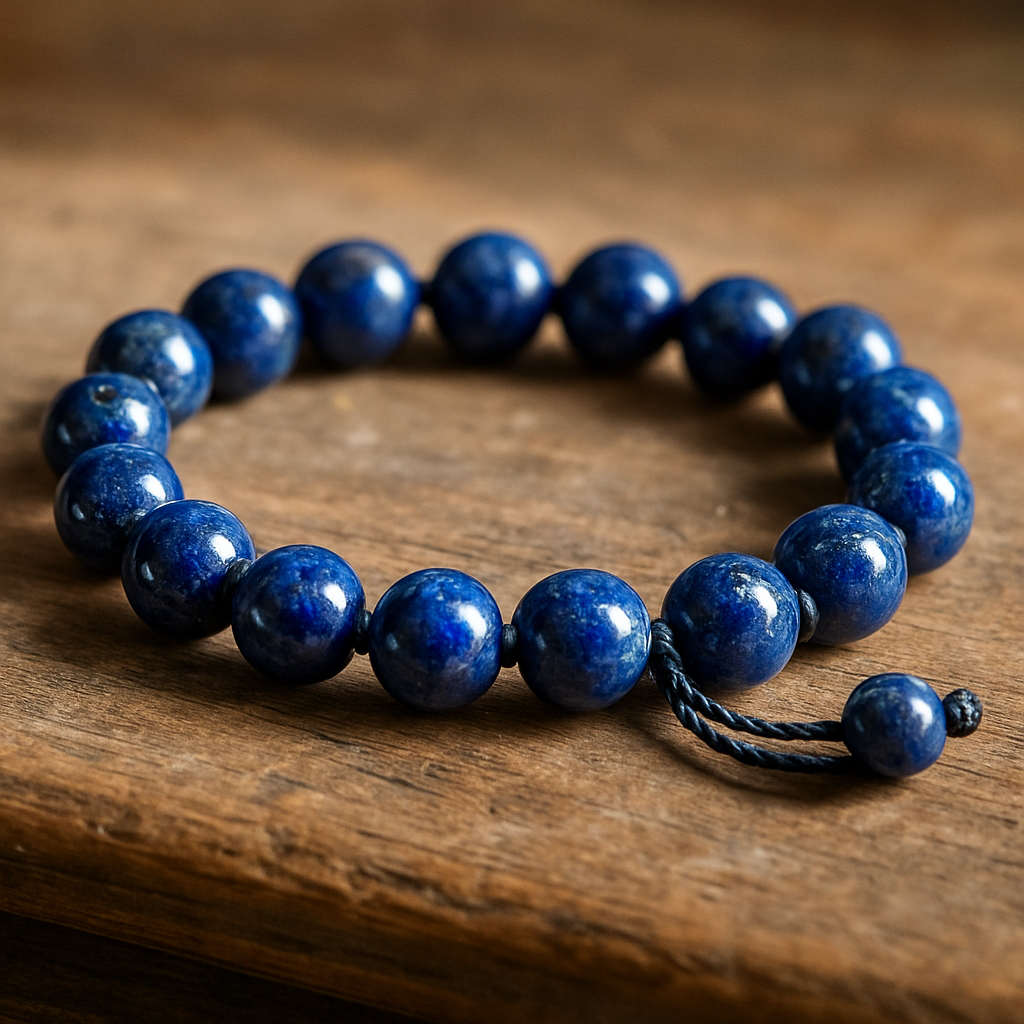
Bracelet comfort starts with the bead size. Most creators love 6 mm beads – they’re big enough to showcase the colour, but small enough to sit comfortably on a wrist that isn’t a fashion runway. If you have a petite wrist, 4 mm beads give a delicate look; if you prefer a statement piece, 8 mm works beautifully.
Consider the setting too. An elastic cord is perfect for everyday wear – it slides on and off without tools. For a more polished vibe, a sterling silver or gold‑filled clasp adds a touch of luxury while still letting the stone breathe.
Here’s a quick checklist you can print out:
- Colour: deep blue with natural variation.
- Gold flecks: irregular, not uniform.
- Hardness: around 5‑5.5 on Mohs (gives a faint “thud” when tapped).
- Weight: feels solid, not hollow.
- Size: 6 mm is a safe all‑rounder.
3. Ethical sourcing – why it matters
Authentic lapis traditionally comes from the Badakhshan mines in Afghanistan. Reputable suppliers will be transparent about provenance and may even provide a certificate of origin. When you know the stone was ethically mined, you’re also supporting the communities that have guarded these mines for centuries.
Think of it as a tiny act of stewardship – the bracelet you wear becomes a reminder that beauty and responsibility can coexist.
4. Matching the bracelet to your style
Now that you’ve got the right beads, how do you make the piece feel like you? If you love a minimalist vibe, string the beads on a thin elastic cord and finish with a simple knot. For a boho‑chic look, alternate lapis with gold or brass spacers; the metal echoes the pyrite specks and adds a subtle gleam.
Real‑world example: Maya, a yoga teacher from Brighton, started with a single‑strand lapis bracelet on an elastic. She later added 2 mm gold spacer beads between every third lapis, creating a rhythm that feels like a breath – in‑and‑out, pause, repeat.
And if you’re into layering, try a thinner leather cord underneath the lapis strand. The earthy leather grounds the colour, while the lapis remains the focal point.
Don’t forget the metal family you’re pairing with. Gold tones amplify the stone’s warm flecks; silver or white gold lets the deep blue pop against cooler outfits.
5. Care routine to keep the meaning alive
Even the best‑sourced bracelet needs a little TLC. A gentle rinse under lukewarm water removes daily grime, then lay it on a sunny windowsill for five minutes to recharge the stone’s vibration. Avoid harsh chemicals – they can strip the natural glaze that makes lapis look alive.
Once a month, give it a moon‑light bath during a full moon. It’s a ritual many crystal enthusiasts swear by, and it aligns perfectly with the stone’s ancient association with the night sky.
Pro tip: store your lapis bracelet separately from harder stones like quartz or sapphire. A soft pouch or a dedicated jewellery box prevents scratches that could dull those precious gold specks.
6. Take the next step with confidence
So, what should you do now? Grab a strand of authentic 6 mm beads, set an intention – maybe “I speak my truth today” – and start threading. Remember, the act of creating is itself a meditation; each bead you add locks in a bit of that ancient wisdom.
When the bracelet sits on your wrist, notice how the colour shifts with your movement. That subtle dance is the stone reminding you that truth isn’t static – it’s alive, breathing, and ready to support you.
Ready to explore the perfect beads? Take a moment, breathe, and let the lapis guide you to a piece that feels as genuine as the meaning behind it.
Conclusion
We've walked through the history, how to spot genuine stones, the energy they carry, and even a few styling tricks. All of that points to one simple truth: a lapis lazuli bracelet meaning goes far beyond a pretty splash of blue.
When you wear the stone, you're inviting centuries‑old wisdom onto your wrist. That little boost of confidence you felt during a client pitch or a yoga class? It's the lapis doing its quiet work.
So, what now? Grab a strand of authentic 6 mm beads, set an intention – perhaps “I speak my truth today” – and let the beads become a moving meditation.
Remember to cleanse under moonlight or a gentle rinse, and store it separately from harder gems to keep those golden specks shining.
Feel the stone's pulse each morning, notice how the colour shifts with your movement, and let that be your reminder that truth is alive, not static.
Ready to make the most of lapis lazuli bracelet meaning? Take a breath, pick your beads, and start creating a piece that feels as genuine as the intention behind it.
And if you ever feel the energy fading, a quick moon‑light recharge or a sunny windowsill pause will revive it, keeping your bracelet a living source of confidence.
FAQ
What does “lapis lazuli bracelet meaning” actually refer to?
At its heart, the phrase is about the stone’s symbolism rather than just its colour. Lapis lazuli has been linked to wisdom, truth‑telling and the throat chakra for millennia, so a bracelet made from genuine beads is thought to carry those energies onto your wrist. In practice that means you might feel a little boost in confidence when you need to speak up, or a subtle reminder to stay honest with yourself. It’s less a magic spell and more a wearable intention‑setter.
How can I tell if my lapis lazuli bracelet is genuine?
Start by looking for the deep, uneven blues that shift as you turn the stone – a uniform electric blue is often a sign of dye. Real lapis also shows irregular gold‑speckled pyrite flecks that look like tiny stars, not perfectly round dots. The stone is a bit soft on the Mohs scale (around 5‑5.5), so a gentle tap gives a muted thud rather than a sharp clang. Finally, genuine beads feel a touch heavier than plastic imitations. If it checks these boxes, you’re probably holding the real deal.
Does wearing a lapis lazuli bracelet really help with communication?
Many users report clearer speech and steadier nerves, especially before presentations or meetings. The stone is associated with the throat chakra, which in crystal lore governs expression and listening. While science hasn’t quantified a “communication boost,” the psychological effect of a trusted talisman can be powerful – you simply feel more grounded, and that confidence translates into smoother conversation. Pair the bracelet with a short affirmation (“I speak my truth”) and you’ll notice the shift more quickly.
How often should I cleanse and recharge my lapis lazuli bracelet?
Think of cleansing as a quick reset. A gentle rinse under lukewarm water once a week removes surface grime and helps the stone breathe. For energetic recharge, place the bracelet in moonlight during a full moon – a few hours are enough – or give it a short sun‑kiss on a windowsill (five to ten minutes) to restore the sparkle of the pyrite flecks. If you’ve been wearing it through a stressful day, a quick moon‑light bath can revive the subtle vibration.
Can I combine lapis lazuli with other crystals in a bracelet?
Absolutely, and it can even enhance the overall energy. Pairing lapis with clear quartz is a classic combo: quartz amplifies the blue’s intuition‑boosting vibe while keeping the colour bright. For a grounding touch, add a few rose quartz beads to invite gentle compassion during tough conversations. Just keep the ratio balanced – you don’t want the auxiliary stones to drown out the lapis’s signature deep blue and golden speckles.
What’s the best way to set an intention while threading the beads?
Treat each bead as a tiny meditation. Before you slide a bead onto the cord, pause, take a breath, and speak a short intention aloud – something like, “I speak my truth today” or “I stay calm in the meeting.” Visualise the colour deepening as you add the next stone. By the time you finish the strand, you’ve woven a series of focused thoughts into the bracelet, turning a simple accessory into a moving mantra.
What bead size and wrist length work best for a comfortable lapis bracelet?
Six‑millimetre beads are the sweet spot for most people: big enough to showcase the blue and gold specks, yet small enough to sit comfortably without feeling bulky. Measure your wrist, add about 2‑3 cm for a little stretch, and cut an elastic cord to that length. If you have a petite wrist, 4 mm beads create a delicate look; if you prefer a statement piece, 8 mm works nicely. A secure knot or a simple lobster clasp finishes the piece without sacrificing ease of wear.
